Find the tariff
Find TARIFA and use the code actually printed on the bill, such as 1C or DAC. Do not assume every property in the area has the same tariff.
Mirasol · Los Cabos
Find the tariff, billing dates, kWh and consumption history. Then separate current charges from old balances. This English guide keeps the Spanish bill labels so you can find the numbers needed for a solar quote in Cabo San Lucas, San José del Cabo or the Tourist Corridor.
Mirasol guide · Updated
Quick read
Find TARIFA and use the code actually printed on the bill, such as 1C or DAC. Do not assume every property in the area has the same tariff.
Read the billed period and kWh, then convert bimonthly consumption into a monthly comparison.
Use the current period energy and kWh for solar analysis, not an inflated total caused by old debt.
Review the previous 12 months and the limit for your tariff. One two-month bill is not the annual average CFE uses.
Bill map
Look for the labels even if a photo and a PDF arrange them differently: TARIFA is the rate category; PERIODO FACTURADO gives the billing dates; kWh measures energy, not pesos. HISTORIAL shows usage across summer, winter and changes in occupancy.
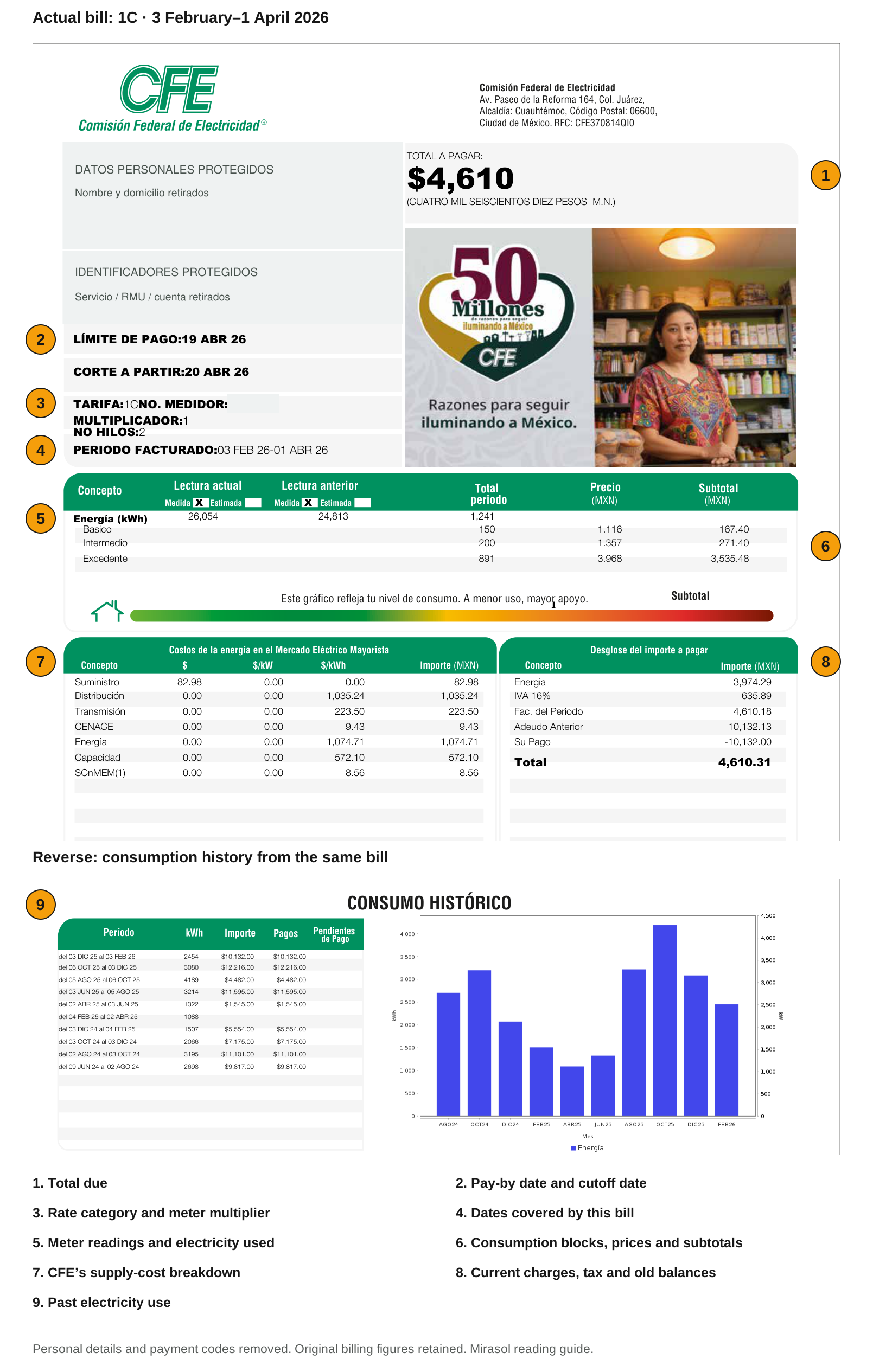
Match the numbered markers to the explanations below. The Spanish labels stay visible so you can find the same fields on your own bill. Tap or click the bill to enlarge it.
Open the labeled bill at full size ↗
TOTAL A PAGAR
This is the amount CFE asks you to pay. The front rounds it to $4,610 MXN; the detailed total is $4,610.31. It includes the remaining balance from the previous bill.
LÍMITE DE PAGO / CORTE A PARTIR
Pay by 19 April 2026. The next line says service may be cut from 20 April. These dates are separate from the dates of electricity use below.
TARIFA / MULTIPLICADOR
This service is printed as tariff 1C, with multiplier 1. That determines which rate rules to check. A high peso amount alone does not mean the service is on DAC; read your own TARIFA field.
PERIODO FACTURADO
03 FEB 26–01 ABR 26 means 3 February–1 April 2026. The 1,241 kWh below belongs to this whole period. Do not compare it directly with a one-month solar payment.
LECTURA ACTUAL / LECTURA ANTERIOR / TOTAL PERIODO
The meter went from 24,813 to 26,054. Subtract the readings and apply multiplier 1: 1,241 kWh used. kWh measures electricity; it is not a peso amount. The X marks measured readings on this bill.
BÁSICO / INTERMEDIO / EXCEDENTE · PRECIO / SUBTOTAL
CFE splits these 1,241 kWh into 150 basic, 200 intermediate and 891 excess. PRECIO is MXN per kWh; SUBTOTAL is the charge for that row. These are this historical winter bill’s rates, not today’s prices for every home.
COSTOS DE LA ENERGÍA EN EL MERCADO ELÉCTRICO MAYORISTA
The left-hand box explains supply, distribution, transmission and other energy-market costs. Do not add this box again to the right-hand payment breakdown; that would double count the bill.
DESGLOSE DEL IMPORTE A PAGAR
ENERGÍA is $3,974.29 and IVA is $635.89. FAC. DEL PERIODO is their $4,610.18 invoice. ADEUDO ANTERIOR means previous balance; SU PAGO means your payment. $10,132.13 − $10,132.00 leaves $0.13, bringing the account total to $4,610.31.
CONSUMO HISTÓRICO
On the reverse, each row is a previous billing period. kWh is electricity, IMPORTE is the bill amount, PAGOS is payments and PENDIENTES DE PAGO is unpaid balance. The blue bars show kWh. Use dated rows to compare seasons; these bars alone do not prove when DAC began.
Field definitions: Puebla Energy Agency — understand your CFE bill (Spanish). The figures shown here come from this bill; the reference is used for field meanings, not BCS prices.
Service number, RMU, meter, and service address tell us which property we are evaluating and help connect the bill to roof and neighborhood data.
A bimonthly bill must be normalized before anyone compares it to a monthly solar payment.
Energy, IVA, period invoice, previous balance, and previous payment explain why the total due can differ from the current period consumption.
Validation
Check that meter readings and any multiplier explain consumption, and that charges, taxes, balances and payments explain the total. If a number is unclear or does not reconcile, use the PDF or request clarification before basing a solar quote on it.
If the bill shows a multiplier, it applies to the difference between the current and prior reading. On digital meters it is usually 1.
For solar analysis we use primarily the current period consumption and energy charge, not prior balances that can inflate a single bill.
Illustrative example: 2,000 kWh over two months averages about 1,000 kWh per month. That period average does not reveal daytime consumption or replace annual history when sizing solar.
DAC risk
CFE determines DAC using average monthly consumption over the previous 12 months. The 1C limit is 850 kWh per month; other tariff categories have different limits. A neighbor's tariff or a single high bill cannot establish your own DAC status.
The bill typically no longer shows the domestic subsidy in the same form. Solar usually makes stronger economic sense, but exiting DAC takes time because the rolling average adjusts slowly.
Check recent history. One high bimonthly bill may not trigger DAC, but several months above the limit change the risk profile significantly.
The property's history matters. Before renting, buying, or transferring the account, confirm whether past consumption already carries DAC risk.
Before quoting
Share a readable photo or complete PDF, the property location and available consumption history. Mention changes to occupants, air conditioning, the pool or months of use. A previous owner's bill helps you start, but their consumption may differ from yours.
Recalculate the winter bill shown here, then compare a bill that crosses into summer.
Read a real DAC bill and see what annual history can establish about high consumption.
Use the kWh and tariff you found to compare panel count, roof production and the installed solar scope.
For a Cabo San Lucas home, review roof rights, access and summer occupancy before requesting installation prices.
FAQ
Consumption in kWh and tariff are the most important. The total due helps, but it may include previous balances or charges that solar does not erase.
DAC means Doméstica de Alto Consumo, the domestic high-consumption tariff. CFE applies it when average monthly use over the previous 12 months exceeds the limit for the service's tariff category. One unusually high bill alone does not establish that average.
The total due can include previous balances, partial payments, rounding, or municipal charges. For solar analysis we use only the current period consumption in kWh and the period energy charge — not the full total, which may reflect debt unrelated to this bill cycle.
It covers approximately two months. For an initial monthly comparison, divide that period's consumption by two: 2,000 kWh would average about 1,000 kWh per month. Check the exact dates and full history. This average does not show how much electricity you use during solar hours.
Sources
These references provide technical context. Your location, energy needs and project scope still need an individual assessment.
Ready to start?
One photo is enough. We read your consumption, tariff, and solar potential at your address and tell you whether it makes sense to move forward.